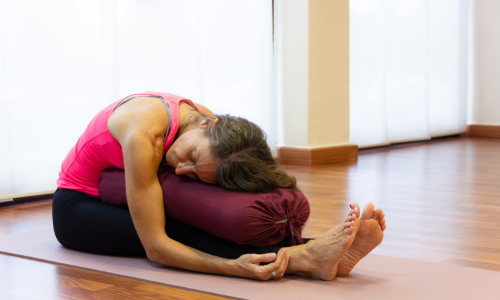
Yin Yoga is a slow, calming, and deeply restorative style of yoga that focuses on holding poses for longer periods of time. Unlike fast-paced yoga styles, Yin Yoga targets deep connective tissues, such as ligaments, joints, and fascia, rather than just muscles.
It is often described as a meditative form of yoga because it encourages stillness, patience, and deep inner awareness.
Table of Contents
- What Is Yin Yoga?
- How Yin Yoga Is Different
- Why Yin Yoga Feels Unique
- Benefits of Yin Yoga
- Common Yin Yoga Poses
- Who Should Practice Yin Yoga
- Conclusion
What Is Yin Yoga?
Yin Yoga is a slow-paced style where poses are held for a longer duration, usually between 2 to 5 minutes or more. It focuses on relaxing the muscles and gently applying stress to deeper connective tissues.
The goal is not movement or strength, but stillness and deep stretching.
How Yin Yoga Is Different
Yin Yoga stands out from other yoga styles because of its unique approach:
- Poses are held for a long time
- Muscles are kept relaxed instead of active
- Focus is on deep tissues and joints
- Practice is slow and meditative
- Breathing is calm and natural
y=Yin Yoga long-held passive stretching for deep connective tissues
This makes Yin Yoga very different from dynamic styles like Vinyasa or Ashtanga.
Why Yin Yoga Feels Unique
Yin Yoga is unique because it works on both the body and mind in a very different way:
- Encourages stillness in a fast-paced world
- Helps release deep physical tension
- Promotes emotional relaxation
- Improves mindfulness and awareness
- Teaches patience and acceptance
It is not about performance, but about letting go.
Benefits of Yin Yoga
| Benefit | How It Helps |
|---|---|
| Deep Flexibility | Improves joint mobility |
| Stress Relief | Calms nervous system |
| Better Circulation | Enhances energy flow |
| Emotional Release | Reduces mental tension |
| Improved Mindfulness | Increases awareness |
Yin Yoga is especially powerful for relaxation and recovery.
Common Yin Yoga Poses
Some popular Yin Yoga poses include:
- Child’s Pose
- Butterfly Pose
- Dragon Pose
- Caterpillar Pose
- Sphinx Pose
- Reclining Twist
These poses are held for longer durations to allow deep stretching.
Who Should Practice Yin Yoga
Yin Yoga is suitable for:
- Beginners looking for gentle yoga
- People with high stress levels
- Athletes needing recovery
- Individuals with tight muscles
- Anyone seeking relaxation and mindfulness
It is especially helpful for balancing active lifestyles.
Conclusion
Yin Yoga is unique because it focuses on slow, deep, and mindful stretching rather than fast movements or physical strength. By holding poses for longer periods, it helps release deep tension, improve flexibility, and calm the mind.