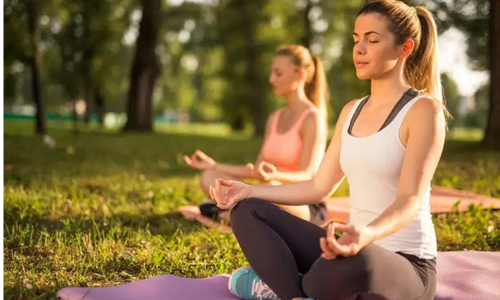
Range of motion refers to how freely your joints can move in different directions. If your range of motion is limited, simple activities like bending, reaching, or twisting can feel stiff or uncomfortable. This often happens due to inactivity, aging, poor posture, or tight muscles.
Yoga is one of the most effective and natural ways to improve range of motion by gently stretching muscles and mobilizing joints through controlled movement.
Table of Contents
- What Is Range of Motion?
- Why It Becomes Limited
- How Yoga Improves Range of Motion
- Best Yoga Poses for Joint Mobility
- Simple Daily Practice
- Conclusion
What Is Range of Motion?
Range of motion is the ability of a joint to move through its full potential. For example:
- How far you can lift your arms
- How deeply you can bend your knees
- How easily you can twist your spine
Good range of motion means your body moves smoothly without pain or restriction.
Why It Becomes Limited
Several factors can reduce your range of motion:
- Sitting for long hours
- Lack of stretching or exercise
- Muscle stiffness
- Injuries or poor posture
- Aging and reduced activity
Over time, joints become less flexible and muscles tighten, making movement harder.
How Yoga Improves Range of Motion
Yoga improves mobility by combining stretching, strength, and controlled movement.
| Method | How It Helps |
|---|---|
| Dynamic Movement | Keeps joints active and mobile |
| Deep Stretching | Lengthens tight muscles |
| Controlled Breathing | Helps muscles relax |
| Repeated Practice | Gradually increases flexibility |
| Full-Body Engagement | Improves overall mobility |
Yoga focuses on smooth, natural movement rather than forceful stretching.
Best Yoga Poses for Joint Mobility
Here are some of the most effective yoga poses for improving range of motion.
1. Cat-Cow Stretch
y=Cat-Cow spinal mobility movement cycle
A gentle flow that improves spinal movement.
Benefits:
- Increases spine flexibility
- Reduces stiffness
- Improves posture
2. Downward-Facing Dog
A full-body stretch that enhances mobility.
Benefits:
- Improves shoulder and hamstring flexibility
- Strengthens arms and legs
- Increases blood flow
3. Warrior II Pose
A strong standing pose for hip and leg mobility.
Benefits:
- Opens hips
- Improves balance
- Strengthens lower body
4. Low Lunge
A deep stretch for hip flexors.
Benefits:
- Improves hip mobility
- Reduces tightness
- Supports lower back health
5. Seated Twist
A gentle twisting pose for spinal mobility.
Benefits:
- Improves spine rotation
- Relieves back tension
- Enhances flexibility
6. Bridge Pose
A gentle backbend for spine and hips.
Benefits:
- Improves lower back movement
- Strengthens glutes
- Enhances posture
Simple Daily Mobility Routine
| Pose | Duration |
|---|---|
| Cat-Cow | 2 min |
| Downward Dog | 2 min |
| Low Lunge | 2 min each side |
| Warrior II | 2 min each side |
| Seated Twist | 2 min |
| Bridge Pose | 2 min |
⏱ Total Time: 15–20 minutes
Tips for Better Mobility
- Practice daily or at least 4–5 times per week
- Move slowly and avoid forcing joints
- Focus on deep breathing
- Warm up before stretching
- Stay consistent over time
- Listen to your body and avoid pain
Mobility improves with patience and regular practice.